

Why clipping is exploding
Brands face a paradox: paid social keeps getting more expensive (Meta CPMs jumped 20% year-over-year in 2025, up to +38% in some categories — Clouted / Triple Whale, 2026), influencer rates rose 13 to 67% depending on tier (Greaterthan, 2026), while organic reach keeps collapsing — an Instagram post now reaches just 3.5% of followers (Socialinsider, 2026).
Meanwhile, short-form video outperforms everything else: Reels generate 1.4 times more reach than static posts (Socialinsider, 2026). Clipping was born from this equation: produce hundreds of short videos at controlled cost, and only pay for results. Born in gaming and streaming culture, the model became a structured pay-per-view industry in 2024 and is now spreading to every sector.

Pay per view, not per post
The principle flips the logic of classic influence: the brand doesn't pay for a post, it pays for verified views. A budget envelope is set at a given CPM; clippers draw from a source-content library provided by the brand — long-form content, influencer content already produced, UGC, event captures — and publish their clips on their own accounts. The better a clip performs, the more the clipper earns.
Two structural advantages follow. An unbeatable CPM: 3 to 8 times lower than equivalent paid social. And a model built for the algorithm: hundreds of videos with different hooks, letting winning content emerge organically — where an ad bets everything on a single creative.
Our difference: Brand-Safe Clipping
Classic clipping runs as an open marketplace: anyone can clip, and the brand discovers the content after publication. For a brand, that is unacceptable. So we flipped the model with MKA Clipping, the clipping offer of Matriochka Influences.
First principle: a casting, not an open call. Our pools of 20 to 30 clippers per campaign are selected, identified and under contract — no anonymous accounts.
Second principle: validation before publication. Every clip is checked (AI screening + human review) against the brand's guidelines before going live, not after. Commercial disclosure requirements, brand tags, sector-specific rules: everything is framed in the brief, in line with the French influence law.
How it works, concretely
Our industrialised process has ten steps: building the contracted clipper pool, setting the envelope and CPM (with a minimum and maximum payout per clip), locking the source-content library, writing the full brief, production (clips of 7 to 45 seconds — an active clipper posts 3 to 5 clips a day), validation before publication, publishing on the clippers' own accounts (live 30 days minimum), URL submission for tracking, daily verified-view readings with anti-fraud checks, then closing and per-view payment.
The order of magnitude: one month of campaign with 30 clippers means 3,000 to 4,500 published clips. On budget: clipper CPMs sit around $2–3, versus $5–13 on TikTok Ads, Reels or Shorts — an effective all-in CPM, fees included, of around $3–4.
500 times the original reach: proof from live
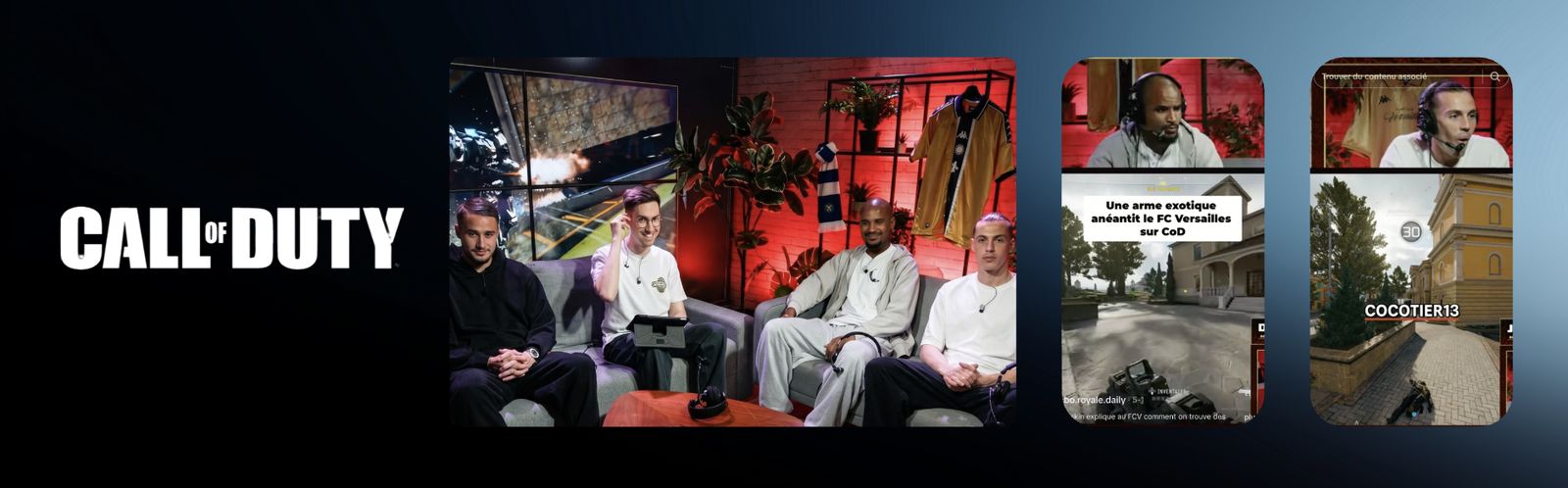
To maximise the organic reach of a Twitch livestream, we had 6 clippers produce 400 clips in two weeks, distributed across TikTok, Reels and Shorts. The result: 500 times the reach of the original content. That is the clipping mechanic: one source content, hundreds of lives.
The approach naturally extends our Twitch and streaming and UGC expertise: the content we produce for our clients becomes the raw material of their clipping campaigns.
What can be clipped?
First, your existing content, at zero production cost: TV spots and ad films (current or archive), influencer content already paid for and often under-exploited, videos from your social accounts, unused shoot footage, event captures. Then, content made for clipping: product demos, expert formats, filmed routines, street interviews, commissioned UGC.
Two ways to run it: the managed service — up to 3 markets, fully operated by Matriochka, live in 2 weeks — or a dedicated brand clipping platform, industrialised and always-on, for advertisers who want to internalise the model at scale.

Frequently asked questions
What exactly is clipping?
A performance-based marketing model born from streaming culture: specialised creators (clippers) cut long-form or branded content into short clips they publish on their own TikTok, Reels and Shorts accounts, and get paid on verified views. The brand doesn't buy posts: it buys real audience. To go further, read our complete guide to clipping campaigns.
How much does a clipping campaign cost?
Clipper CPMs sit around $2–3 per 1,000 verified views, plus agency fees — an effective CPM of around $3–4, versus $5–13 for ads on the same platforms. The envelope is fixed upfront: once the budget is spent, the campaign ends.
Is clipping compatible with a brand's image?
With open-marketplace clipping, hardly. That is why our model is brand-safe: cast and contracted clippers, source content provided by the brand, every clip validated before publication, systematic legal disclosures. The brand keeps full control of what goes live.
What is the difference between clipping and influencer marketing?
Influence pays a creator for their endorsement and audience; clipping pays for distribution, on performance. The two combine: influencer content becomes the raw material for clips, and clipping multiplies its reach at marginal cost.
Video clipping or press clipping?
Historically, "clipping" refers in PR to media coverage monitoring. The clipping we're talking about here is video clipping, born from the creator economy — a distribution model paid per view. Two different crafts, and we happen to practise both.
Want to test clipping for your brand?
Contact Matriochka Influences for a first conversation.
elodie.monchicourt@mtrchk.com / charlie.trouillebout@mtrchk.com
To go further: our UGC agency, our Twitch influencer agency and our guide to influencer campaign costs.
Last updated: July 2026
Next-Gen Influence
A value chain inspired by advertising and supercharged with AI, turning influence into a strategic lever for our clients' business success.