


What kind of public relations do we do? Corporate, consumer and corpsumer
A brand does not have a single reputation. Its group speaks to investors, institutions and candidates. Its products speak to consumers. And journalists read both together. We work across all three registers.
Corporate PR
The group's voice: executive positioning, results and strategy, CSR, public affairs, institutional events, crisis management. It targets the business and economic press, national media and the international press correspondents based in Paris.
Consumer PR
Product launches, collections, campaigns, events, product reviews and loans, partnerships. The targets are mainstream, lifestyle and specialist press, television, radio and content creators. Our tech PR agency page is a detailed example.
Corpsumer PR
This is our name for topics that sit in both worlds at once. The origin and supply chain of a food product, the CSR policy of a beauty group, a carmaker's strategy, a foundation's philanthropy programme: the group's reputation feeds preference for its products, and the products carry the group's image. That takes a single story, told to two kinds of journalists, the business press on one side and the consumer press on the other. For Panzani, for example, we handle the group and its products under one editorial line.
Which media do we activate? Traditional media and the new generation
Your audiences read both. We work them in a single programme.
Traditional media
Print, television, radio and online press: national and business dailies, magazines and sector-specific press, news channels and programmes, morning radio shows, news sites. We add the international press correspondents in Paris, who matter as soon as a story crosses borders.
The new generation
Podcasts, newsletters, pure players, journalists who publish on LinkedIn, journalist-influencers. Their audience is sometimes smaller, often more attentive. A newsletter read by the decision-makers of a sector, or a journalist followed on LinkedIn by executives, can reach targets that the daily press reaches poorly. We treat these voices with the same rigour as the press, and with the tools of public relations: exclusives, interview proposals, product loans, events. The details are on our influencer PR agency page.

Why our model rests on relationships first
"Relations" is the first word of "public relations". Our consultants maintain long-term relationships of trust with the journalists of each sector: business and corporate press, national general-interest press, television and radio, pure players, foreign correspondents, newsletters, podcasts. Elodie Monchicourt-Lecuyer has worked with newsrooms for more than twenty-five years.
A journalist answers someone who has already brought them a good story. That trust builds up file after file, and it changes the nature of the work: a direct conversation rather than a mass mailing, a meeting secured for an executive, an exclusive offered to the right outlet, a quick answer when a situation gets tense.
How do we work? A four-step method
Our method is inspired by advertising agencies: creativity, rigour, and tools that make the work measurable.
1. Strategic planning
We start from data: media and social listening, AI listening, anticipation of trends and risks. We identify the topics on which your brand is expected to speak, and those on which it is exposed.
2. Creation
We design the angles, concepts and content that give a journalist a reason to take up the story.
3. Full-funnel rollout
We engage journalists, traditional and new generation, and creators, with our PR and influence tools.
4. Reporting
We track press coverage, influence and your brand's presence in AI answers in real time, with milestone reviews and a final report with recommendations.
Fueling these steps, monitoring that works in real time
Our monitoring system picks up weak signals and automatically scores each opportunity and each risk, then our strategic planning team validates them. An opportunity alert arrives by email before noon and can be discussed in a weekly call. A risk alert goes out as soon as it is detected. A monthly editorial board decides on angles. Then we pitch journalists and creators, adapt upcoming campaigns and, when needed, set up a crisis unit.

What is the impact of PR on AI answers?
Ask ChatGPT which beauty group is furthest ahead on CSR. The answer will come, for the most part, from press articles. What the press has written about your brand now shapes what AI says about it.
Why do AI answers matter to a brand?
AI has entered the purchase journey. According to the Odoxa study for Fevad (February 2026), 31% of French online shoppers use generative AI in their purchase journey, and 49% of 15-24 year-olds. According to the iAdvize x Ifop study (January 2026), 48% of online shoppers say AI influences their decisions. A brand missing from those answers is missing from the comparison.
What does AI read to answer?
Mostly press and third-party content. In its "What Is AI Reading?" study of May 2026, Muck Rack analysed more than 25 million links cited by ChatGPT, Claude and Gemini. Earned media (journalism, research, institutional sources, third-party content) accounts for 84% of citations. Journalism alone makes up 27%. Paid and advertorial content accounts for 0.3%. And more than half of journalism citations come from articles published in the last twelve months.
A brand does not buy its place in an AI answer. It earns it through editorial coverage. Public relations, which has always existed, now has an additional reader.
What does this change for a PR strategy?
Four things.
a. Choose the media that AI actually reads in your sector, using an LLM listening tool, rather than by habit.
b. Renew coverage continuously: last year's coverage weighs less than a recent article.
c. Do not depend on a single outlet. AI journalism citations span more than 20,000 media, and new-generation voices (podcasts, newsletters, journalists on LinkedIn) are also among the sources.
d. Measure the brand's presence in AI answers as a share of voice, month after month, on a fixed set of questions, and correct what is wrong or outdated.
Can anyone guarantee that an AI will cite a brand?
No. AI engines control their own sources, and their answers vary from one question to the next. Muck Rack's study measures what AI cites, not what those citations bring to brands. What we control is the raw material: editorial coverage, its quality, its freshness, and measurement.
That is the purpose of our Matr·IA·chka offer. To understand how AI chooses its sources, read our article How AI Chooses Which Brands to Cite, and our op-ed in Stratégies (in French), "ChatGPT, Gemini, Claude… Ces nouveaux giga-influenceurs qui font et défont le succès des marques".
What PR references do we have?
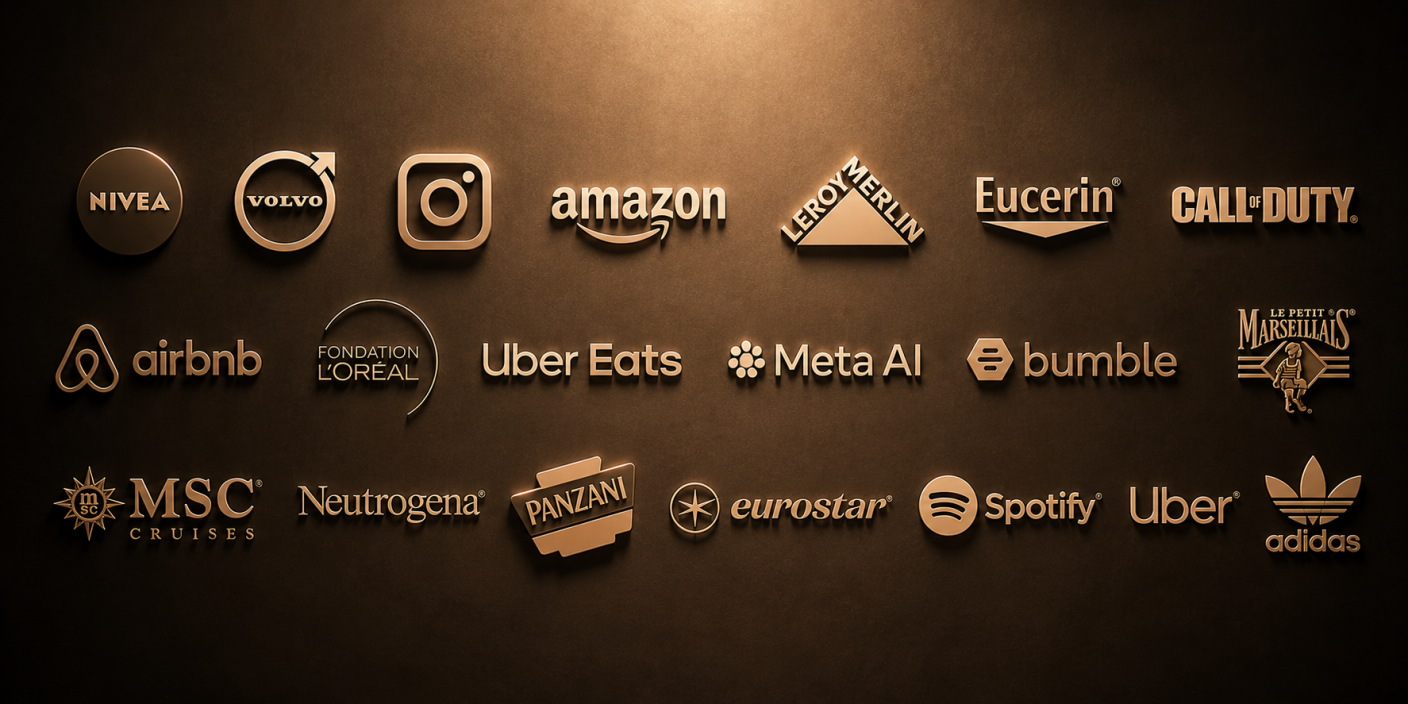
On the corporate side, we support Yves Rocher, Amazon, Panzani and the UK Foreign Office on media relations, public affairs, events and executive communications. For the L'Oréal Foundation, we run the press relations of the L'Oréal-UNESCO For Women in Science Awards, as part of a multi-year international strategy.
On the consumer and corpsumer side: Airbnb with "Hexagonal Green", Panzani with "Le Tour de France du blé 100% français", Volvo with "In Every Car", a two-month 360° programme that generated 28 million impressions and €1.7M in EMV, and the Spotify Podcast Awards, the first French podcast awards ceremony, held at the Grand Rex: 800 guests, 150 million impressions.
Find our all of our campaigns.
Frequently asked questions
What does a PR agency do?
It secures credible editorial presence in the media for a brand or a group: defining messages and angles, writing press releases and press kits, building relationships with journalists, organising interviews and events, managing crises, measuring coverage. At Matriochka, this work covers traditional media and the voices of the new generation.
What is the difference between corporate, consumer and corpsumer PR?
Corporate PR concerns the group: executives, results, CSR, public affairs. Consumer PR concerns products: launches, campaigns, reviews. Corpsumer PR covers topics that touch both, such as the origin of a product or the CSR policy of a consumer brand, and that call for a single story told to both the business press and the consumer press.
Do you work with podcasts, newsletters and journalists on LinkedIn?
Yes. We treat them as full media, on the same footing as print, television and radio. Depending on the topic and the target, they are activated on their own or alongside traditional press.
How do you measure PR results?
With indicators defined upfront with the client: press coverage (print, digital, broadcast), reach, impressions, share of voice, advertising value equivalent (EMV), traffic. We also track the brand's presence in AI answers, on a fixed set of questions. Reporting is in real time, with milestone reviews and a final report with recommendations.
Does PR improve my brand's visibility in ChatGPT?
It acts on what AI reads. According to Muck Rack, 84% of the links cited by ChatGPT, Claude and Gemini come from earned media. No agency can guarantee a citation, however: AI engines decide their own sources and their answers vary. We work on coverage, its freshness and measurement.
How does a PR agency charge?
On a project basis or a monthly retainer, depending on the scope. After a first conversation, we send you a recommendation and a tailored budget. 90% of our clients work with us on an annual basis.
Do you also do influencer marketing?
Yes. We bring PR, influence and social media together in a single programme, which we detail on our PR, influence and social media agency page.

Looking for a PR agency in Paris?
Let's talk:
elodie.monchicourt@mtrchk.com / charlie.trouillebout@mtrchk.com
Last updated: October 2026
Next-Gen Influence
A value chain inspired by advertising and supercharged with AI, turning influence into a strategic lever for our clients' business success.